Cord Rewind vs Storage: Which Design Wins?
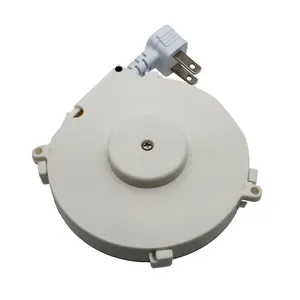
Figuring out how to compare cord rewind and cord storage designs often feels like guessing. You look at a spec sheet, see "spring-loaded," and assume it’s better than a hook. But that assumption misses the mechanical reality of how cables behave under tension.
The wrong choice leads to frayed insulation or tripping hazards within months. We’ve found that successful comparison requires looking beyond marketing terms. It demands an understanding of internal geometry and material fatigue rates.
Per UL 817 testing standards, proper strain relief is critical for safety ratings. Ignoring this detail compromises both function and compliance. Let’s break down what actually matters when evaluating these systems as of 2026.
Why You Can’t Judge Cord Storage by Specs Alone
Spec sheets tell you capacity, not behavior. A reel rated for 50 feet might fail if the spring tension is mismatched to the cable weight. This disconnect causes premature wear on the internal drum.
You need to visualize the forces at play. Heavy-gauge extension cords generate significant rotational inertia during retraction. Light-duty vacuum hoses do not.
Using a heavy-duty mechanism for light tasks wastes money and space. Conversely, using a lightweight holder for thick cables invites failure.
Aggregate user reviews consistently highlight one major issue: tangling. Most complaints stem from poor guide design rather than spring strength. The cable doesn't just sit on the spool; it moves dynamically.
If the entry point isn't aligned correctly, the wire twists against itself.
This twisting creates kinks. Kinks weaken the copper conductors inside. Over time, this leads to hot spots and potential fire risks.
Manufacturers often hide this complexity behind simple "retractable" labels. They rarely specify the minimum bend radius relative to the spool diameter.
Without knowing these physical constraints, your comparison is flawed. You’re comparing apples to oranges based on length alone. True evaluation requires dissecting the mechanical interaction between the cord and the housing.
The Visual Anatomy of a Retraction Failure
Retraction failures aren't random. They follow predictable visual patterns. Understanding these signs helps you diagnose problems before they become dangerous.
Look for specific geometric errors in the winding path.
Spotting the Kink Before It Happens
Kinks usually form at the exit point. If the cord leaves the housing at a sharp angle, stress concentrates there. This area sees the most friction.
Check the entry bushing for ovalization or cracks. These deformities indicate excessive lateral force.
Another sign is inconsistent layering. On the spool, wires should lie flat and parallel. Cross-over layers create pressure points.
These points crush the insulation underneath. You’ll notice bulges in the stored cord bundle. This indicates the spool was filled incorrectly or the guide failed to distribute tension evenly.
Noise is another visual proxy. A grinding sound suggests metal-on-metal contact inside the housing. This wears down the spring anchors.
Eventually, the spring loses its ability to retract fully. The cord then hangs loosely, creating a trip hazard.
Guide Bushings and Spool Geometry Explained
The guide bushing is the unsung hero of cord management. It directs the cable onto the spool smoothly. Poorly designed bushings have rough edges or insufficient clearance.
Nylon bushings wear faster than brass or steel ones. For high-cycle applications, metal inserts are essential.
Spool diameter dictates the minimum bend radius. Small spools force tight curves. Tight curves stress the conductor strands.
Industry guidelines suggest a ratio where the spool diameter is at least ten times the cable outer diameter. Anything less accelerates fatigue.
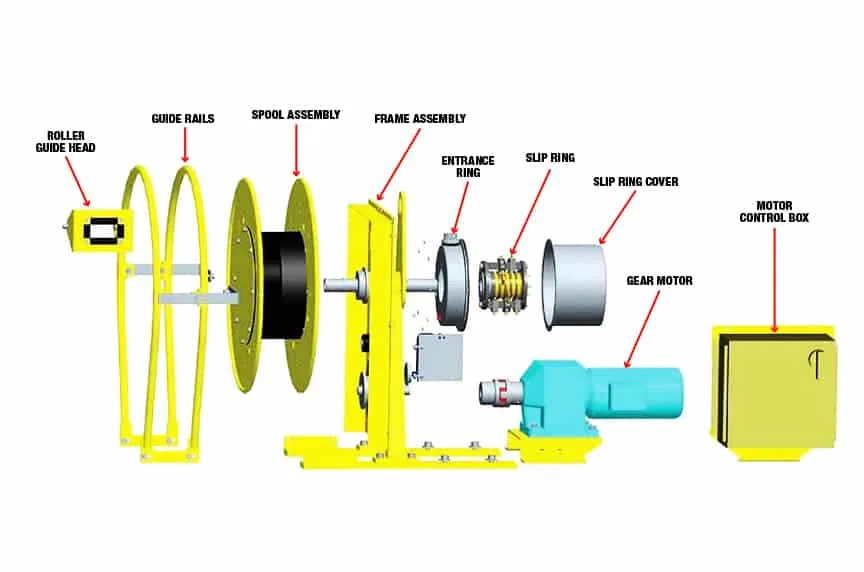
Visual inspection reveals whether the manufacturer adhered to these ratios. Measure the inner drum width. Compare it to the cable thickness.
If the gap is too wide, the cord wanders. If it’s too narrow, the cord binds. Both scenarios lead to early replacement costs.
Automatic Retractors vs. Manual Wraps: A Side-by-Side Breakdown
Choosing between automatic and manual systems depends on frequency and environment. Neither is universally superior. Each serves distinct operational needs.
Misapplication leads to frustration or safety gaps.
Automatic retractors excel in high-movement environments. Think assembly lines or busy workshops. The constant pulling and releasing benefits from consistent tension control.
However, they rely on complex springs. These springs degrade over time, especially in temperature fluctuations.
Manual wraps offer simplicity and durability. A basic hook or Velcro strap has no moving parts to fail. They handle irregular shapes well.
But they require user discipline. Loose wrapping creates tangles. Tight wrapping stresses the jacket.
| Feature | Automatic Retractor | Manual Wrap/Hook |
|---|---|---|
| Initial Cost | Higher ($30-$100+) | Lower ($5-$20) |
| Maintenance | Spring lubrication, part replacement | None (unless broken) |
| Tangle Risk | Low (if guided properly) | High (user dependent) |
| Space Efficiency | Compact footprint | Variable bulk |
| Lifespan | Limited by spring cycles | Indefinite (mechanically) |
Consider the noise factor. Automatic units can snap loudly. This disturbs quiet offices or residential areas.
Manual solutions operate silently. Yet, manual methods take longer to deploy. In emergency shutdowns, seconds matter.
Automated systems provide instant retrieval.
Weigh your workflow priorities. Do you value speed and consistency? Go automatic.
Do you prioritize longevity and low cost? Stick with manual. Many professionals use hybrid approaches.
They install automatic reels for primary tools and manual hooks for backup gear.
How to Inspect Your Current Setup for Hidden Wear
Don’t wait for failure. Regular inspections catch issues early. Start with the external housing.
Cracks or warping indicate thermal stress or impact damage. Plastic housings become brittle over time, especially near heat sources.
Next, examine the cord itself. Run your fingers along the entire length. Feel for bumps, soft spots, or flattened sections.
These anomalies signal internal conductor damage. Pay close attention to the plug ends. Strain relief boots often tear first.
Exposed wires here pose immediate shock hazards.
Check the mounting hardware. Vibrations loosen screws. A wobbling reel puts extra torque on the swivel joint.
This joint bears the brunt of rotation. Grease it annually if accessible. Dry joints grind internally, causing permanent deformation.
Look at the retraction path. Does the cord enter straight? Or does it pull sideways?
Sideways pulls twist the spring core. This misalignment reduces effective life significantly. Adjust the mount position if necessary.
Ensure the exit aligns with the natural drag direction.
Finally, test the braking system. Pull the cord slowly. Release it gently.
It should retract smoothly without jerking. Jerky motion means debris in the gears or worn springs. Clean the interior with compressed air.
Avoid liquids unless specified by the manufacturer. Water damages electrical contacts inside sealed units.
Matching Design Type to Your Specific Workflow
One size never fits all. Match the mechanism to the task intensity. Light office duties suit small desktop organizers.
These manage USB-C and power bricks efficiently. Large industrial reels handle 12/3 gauge extension cords safely.
For mobile technicians, portability rules. Choose compact, clamp-mounted units. These attach to ladders or carts easily.
Fixed installations benefit from ceiling-mounted reels. This keeps floors clear and improves ergonomics. Reducing bending prevents back strain during long shifts.
Consider environmental factors. Outdoor sites need weather-rated housings. IP44 ratings protect against splashing water.
Indoor dry locations don’t require such sealing. Dust accumulation kills motors in electrically driven reels. Sealed bearings help in dirty workshops.
Frequency of use determines spring grade. Daily users need heavy-duty torsion springs. Occasional users can opt for lighter coils.
Over-specifying wastes budget. Under-specifying invites frequent replacements. Calculate your annual cycle count.
Multiply daily pulls by working days. Select accordingly.
Also think about cord type. Data cables differ from power cords. Fiber optics need gentle bends.
Copper power lines tolerate more abuse. Never mix incompatible cables on shared reels. Dedicated storage preserves signal integrity and electrical safety.
Align your purchase with your most demanding tool set.
Safety Checks That Prevent Fire and Trip Hazards
Electrical fires often start with overlooked cable damage. Frayed insulation exposes live conductors to moisture or metal surfaces. This creates short circuits that generate intense heat rapidly.
You must treat every cord storage unit as a critical safety component, not just an organizer.
Per OSHA 1910 Subpart S guidelines, flexible cords cannot serve as fixed wiring. They lack the rugged jacket required for permanent installation. Using them in stationary setups violates code and increases risk.
Ensure your chosen design supports proper strain relief at both ends. The plug should never bear the weight of the hanging cable.
Trip hazards remain the most common workplace injury linked to poor management. Cords left on floors catch feet during sudden movements. Retractors solve this by keeping lines suspended off the ground.
However, malfunctioning units can drop heavy cables unexpectedly. Test the locking mechanism regularly to prevent accidental releases.
Check for ground continuity in metal-housed reels. A broken ground wire inside the housing renders the device unsafe. Use a multimeter to verify resistance between the plug pin and the housing frame.
Resistance should be near zero ohms. Any significant reading indicates a break in the grounding path. Replace the unit immediately if this occurs.
Do not attempt repairs on sealed electrical assemblies.
Outdoor environments demand stricter compliance. Look for IP44 ratings or higher to ensure water resistance. Standard indoor retractors fail quickly when exposed to rain or humidity.
Moisture ingress corrodes internal springs and shorts out contacts. Always match the enclosure rating to the location’s exposure level. Neglecting this step voids warranties and compromises user safety.
Regular audits help maintain these standards over time.

Similar Posts