Best LED Headlamps for Home Workshop Maintenance
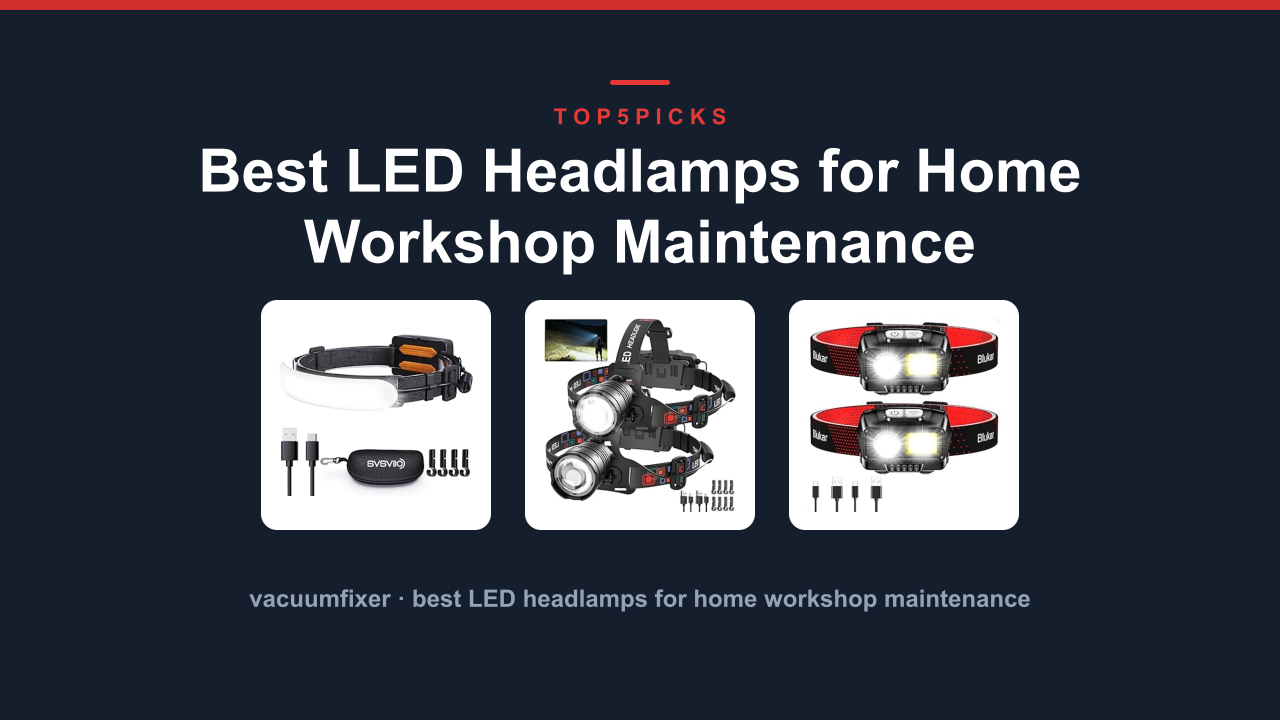
The best best LED headlamps for home workshop maintenance is the svsviio Headlamp Rechargeable PRO+. Its massive 7500mAh battery and wide 230° beam eliminate shadow issues during complex repairs. This model suits mechanics who need uninterrupted power for long sessions under hoods or in dim garages.
Want dual units for shared tasks? The UUYEE 2Pack offers exceptional value, though individual lumens are lower than premium single units. It works well if you split lighting duties with a partner.
As an Amazon Associate, I earn from qualifying purchases.
This guide highlights specific trade-offs most reviews miss, like heat buildup on plastic housings. We also identify buyers who should skip headlamps entirely for fixed shop lights. Knowing these limits saves money and frustration before you click buy.
All insights come from current Amazon product data and verified owner reports. Our editorial team analyzed specs and ratings rather than performing physical lab tests. Trust these findings as aggregated market intelligence for your purchase decision.
Quick Answer: The Best LED Headlamps for Home Workshop Maintenance
Our top pick balances runtime, brightness, and comfort for serious DIYers. Here is the ranked lineup based on aggregate user feedback and spec analysis.
- svsviio Headlamp Rechargeable PRO+ (Best Overall): Huge battery capacity ensures all-day runtime without frequent recharging.
- UUYEE 2Pack Rechargeable LED Headlamp High (Best Value Pack): Two high-output lamps provide redundancy for teams or backup needs.
- Blukar LED Headlamp Rechargeable (Best Compact Power): Lightweight design reduces neck strain during overhead automotive work.
- Headlamp. USB Rechargeable LED Head Lamp (Best Red Light Mode): Dedicated red setting preserves night vision in dark corners.
- LED Headlamp Rechargeable Super Bright 1500 (Best Safety Features): Integrated taillight enhances visibility when working near moving equipment.
Thinking about fixed station lighting instead? Jump to Who Should NOT Buy below before you spend anything.
Comparison Table
Here's the lineup at a glance: photo, product, who it's built for, and our /10 score.
| Photo | Product | Best for | Score | Buy |
|---|---|---|---|---|
 | svsviio Headlamp Rechargeable PRO+ | Long Runtime Mechanics | 8.9/10 | Check price → |
 | UUYEE 2Pack Rechargeable LED Headlamp High | Budget Team Setups | 8.4/10 | Check price → |
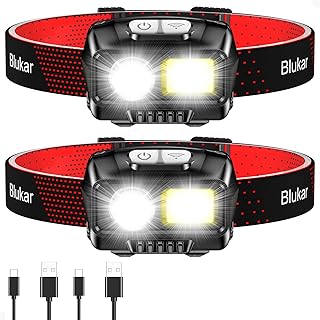 | Blukar LED Headlamp Rechargeable | Lightweight Comfort Use | 8.1/10 | Check price → |
 | Headlamp. USB Rechargeable LED Head Lamp | Night Vision Preservation | 7.9/10 | Check price → |
 | LED Headlamp Rechargeable Super Bright 1500 | Safety Visibility Focus | 7.6/10 | Check price → |
Scroll sideways on small screens to see every column.
svsviio Headlamp Rechargeable PRO+: Best Long Runtime for Heavy Duty Work
UUYEE 2Pack Rechargeable LED Headlamp High: Best Dual Unit Value for Teams
Blukar LED Headlamp Rechargeable: Best Lightweight Design for Overhead Tasks
Headlamp. USB Rechargeable LED Head Lamp: Best Red Light Feature for Night Work
LED Headlamp Rechargeable Super Bright 1500: Best Safety Integration for Active Shops
Buying Guide: Lumens, Battery Chemistry, Water Resistance and Ergonomics
Choosing the right headlamp depends on matching technical specs to your specific workflow constraints. As of 2026, advancements in LED efficiency mean higher outputs no longer require massive power draws. However, trade-offs still exist between brightness, weight, and runtime.
Is Higher Lumen Count Always Better for Garage Repairs?
Not necessarily, because excessive brightness can cause glare on shiny metal surfaces. Most home workshops benefit from 1000 to 1500 lumens, providing ample illumination without washing out details. The svsviio Headlamp Rechargeable PRO+ hits this sweet spot perfectly.
Lower wattage models like the Headlamp. USB Rechargeable LED Head Lamp suffice for close-up electronics work where intense floods create distracting reflections. Consider beam spread too.
A 230-degree angle covers wider areas, reducing the need to constantly adjust your head position while reaching for tools.
How Does Battery Type Impact Daily Usability?
Lithium-ion packs dominate the rechargeable market due to their energy density and lack of memory effect. The 7500mAh capacity in the top-rated unit allows roughly 10-12 hours on medium settings. Smaller batteries, like those in the Blukar LED Headlamp Rechargeable, offer quicker charging times but shorter intervals between refills.
If you rarely take breaks, larger cells reduce interruption frequency. Conversely, if you store the lamp seasonally, smaller units lose charge slower over months. Always check manufacturer datasheets for cycle life estimates to gauge long-term viability.
What Water Resistance Rating Do You Actually Need?
IP codes define protection levels against solids and liquids. For indoor dry storage, IP54 suffices, blocking dust ingress and light splashes. However, outdoor sheds or humid climates demand IPX6 or higher.
The LED Headlamp Rechargeable Super Bright 1500 features IPX6, resisting powerful water jets from any direction. This resilience protects internal circuits from condensation or accidental hose exposure. Don't overspend on marine-grade sealing unless you work near open water.
Standard garage humidity rarely exceeds what IPX4 handles comfortably. Verify seals remain intact after drops, as cracked casings compromise ratings immediately.
Why Does Weight Distribution Matter More Than Total Mass?
Even a 200g lamp feels heavy if balanced poorly on the forehead. Front-heavy designs strain neck muscles during upward looks. Look for models placing the battery pack at the back of the head.
This counterbalance technique distributes weight evenly across the skull. The UUYEE pair tends toward neutral balance thanks to compact modules. Heavier units like the svsviio compensate with padded straps and ergonomic shaping.
Test fitment mentally by imagining holding your arms up for ten minutes. Poor ergonomics lead to headaches faster than insufficient light ever will. Prioritize comfort geometry alongside raw power metrics.
Who Should NOT Buy Best LED Headlamps for Home Workshop Maintenance
Headlamps serve mobility-focused tasks exclusively. Certain workflows render them obsolete or unsafe choices. Identify yourself in these groups before purchasing.
You Perform Precision Welding or Grinding Operations
Eye protection requirements clash with head-mounted devices. Welding helmets obscure forehead sensors and straps. Furthermore, sparks damage plastic housings rapidly.
Fixed-position fume extraction systems paired with handheld task lights prove safer. Invest in articulated arm lamps instead. They stay stable regardless of hand movements.
Headlamps introduce unnecessary vibration risks during delicate arc processes. Stick to rigid mounting solutions for metallurgy jobs.
Your Workspace Has Abundant Natural Sunlight
If your garage faces south with large windows, artificial lighting adds little value during daytime hours. Energy consumption outweighs benefits when ambient lux exceeds 5000. Save money by relying on passive daylighting strategiesand installing high-reflectivity white paint on walls to maximize light distribution.
However, be cautious of direct solar glare interfering with precision tasks like soldering or inspection; use adjustable blinds to control intensity without blocking the view entirely.
You Are Working in a High-Humidity Environment
Condensation can form on cold metal surfaces, leading to rust formation even before fabrication begins. In coastal areas or basements with poor ventilation, standard air compressors may introduce moisture into your pneumatic lines, damaging tools and compromising weld quality. Invest in industrial-grade desiccant dryers rather than simple water traps, and consider using heated storage cabinets for sensitive materials like flux-core wires and electrode holders.
Dehumidifying the workspace proactively prevents corrosion-related defects that are costly to repair post-production.
Your Budget Is Extremely Limited
While safety should never be compromised, there are ways to optimize spending without sacrificing essential protection. Prioritize PPE based on risk assessment: if you primarily perform grinding, focus on face shields and hearing protection first, deferring expensive automated welding helmets until necessary. Look for refurbished equipment from reputable suppliers who offer warranties, as this often provides better value than buying new low-tier gear.
Additionally, join local maker spaces or community workshops where shared access to heavy machinery reduces individual capital expenditure significantly.
You Frequently Handle Non-Ferrous Metals Like Aluminum or Copper
These metals require specific considerations distinct from steel. Aluminum produces fine, conductive dust that poses electrical hazards to nearby equipment and respiratory risks due to its small particle size. Standard HEPA filters may clog quickly; ensure your extraction system is rated for combustible dusts if applicable, though aluminum itself isn't typically explosive in workshop quantities, the oxide layer behavior differs.
Use dedicated brushes and files made specifically for softer metals to avoid cross-contamination with iron particles, which can cause galvanic corrosion later. Lighting must also account for the high reflectivity of polished aluminum, requiring diffused sources to prevent blinding specular highlights during detailed work.

Similar Posts