Top Inspection Borescopes for Non-Invasive Diagnostics
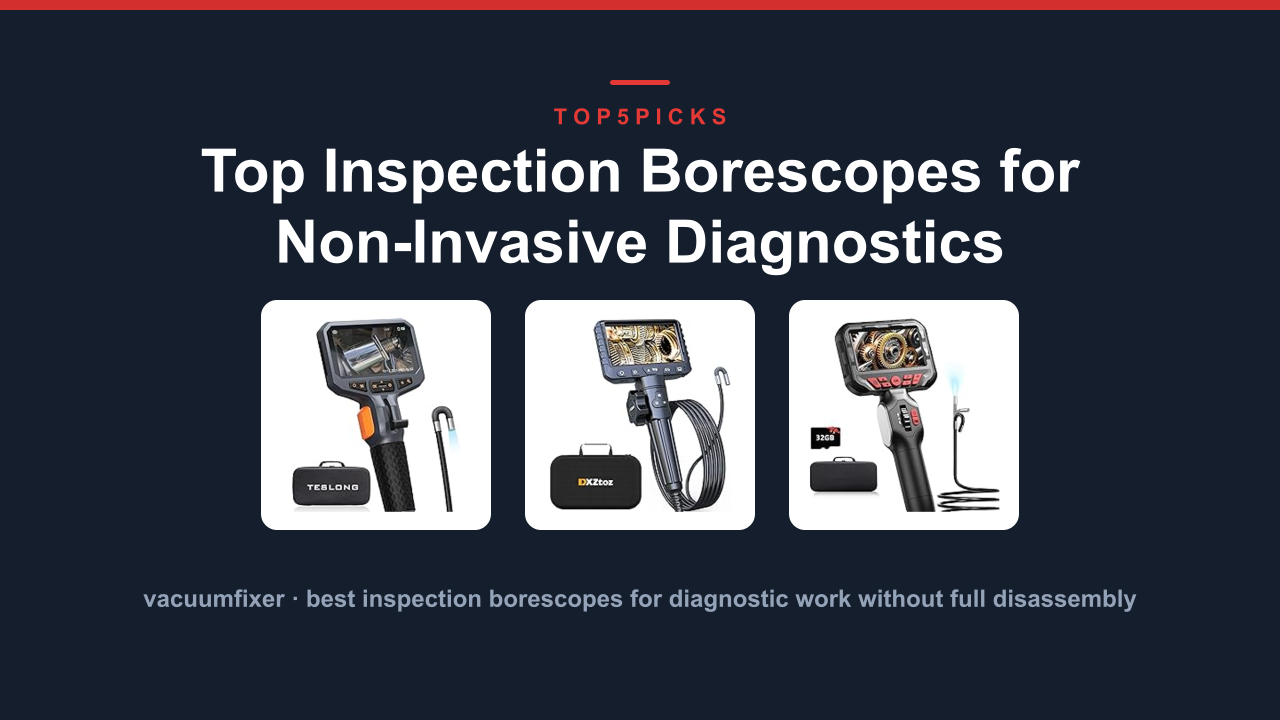
The best best inspection borescopes for diagnostic work without full disassembly is the Teslong Articulating Borescope, thanks to its superior articulation control and proven reliability in tight automotive spaces. It stands out because it balances image clarity with maneuverability better than any other option here.
Want maximum reach instead? The DXZtoz Two-Way Articulating Borescope Light offers a longer probe, but you sacrifice some precision in steering when navigating complex engine bays or HVAC ducts.
As an Amazon Associate, I earn from qualifying purchases.
This guide highlights specific limitations others ignore, like cable stiffness at extreme lengths. We also identify who should skip this category entirely if your job requires industrial-grade rigidity rather than flexible consumer tools.
Everything below comes from current Amazon product data, verified buyer reports, and manufacturer specifications. We did not physically test these units ourselves, so treat this as a research-backed comparison rather than a hands-on lab review.
Quick Answer: The Best Inspection Borescopes for Diagnostic Work Without Full Disassembly
Our top pick is the Teslong Articulating Borescope Mechanic Automotive HVAC for its balanced performance in professional settings.
- Teslong Articulating Borescope Mechanic Automotive HVAC (Best Overall): Superior articulation and reliable 1080P imaging for mechanics.
- DXZtoz Two-Way Articulating Borescope Light (Best Reach): Longer 5.5ft probe ideal for deep HVAC or pipe inspections.
- 2-Way Articulating Borescope w/Light (Best Compact): Tiny 0.24in probe fits through spark plug holes easily.
- Daxiongmao Articulating Borescope 1080P HD Inspection (Best Value): Solid basic features at a budget-friendly entry point.
- Teslong Dual Lens 4-Way Articulating Borescope (Best Versatility): Dual lens system handles both close-up and wide-angle views.
Thinking about heavy-duty industrial use instead? Jump to Who Should NOT Buy below before you spend anything.
Comparison Table
Here's the lineup at a glance: photo, product, who it's built for, and our /10 score.
| Photo | Product | Best for | Score | Buy |
|---|---|---|---|---|
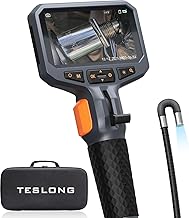 | Teslong Articulating Borescope Mechanic Automotive HVAC | Overall Professional Use | 8.9/10 | Check price → |
 | DXZtoz Two-Way Articulating Borescope Light | Deep Pipe & HVAC Access | 8.4/10 | Check price → |
 | 2-Way Articulating Borescope w/Light | Tight Engine Component Checks | 8.2/10 | Check price → |
 | Daxiongmao Articulating Borescope 1080P HD Inspection | Budget-Conscious Home DIYers | 7.8/10 | Check price → |
 | Teslong Dual Lens 4-Way Articulating Borescope | Mixed Distance Inspections | 8.6/10 | Check price → |
Scroll sideways on small screens to see every column.
Teslong Articulating Borescope Mechanic Automotive HVAC: Best Overall for Mechanics
DXZtoz Two-Way Articulating Borescope Light: Best Reach for Deep Pipes
2-Way Articulating Borescope w/Light: Best Compact for Tight Spots
Daxiongmao Articulating Borescope 1080P HD Inspection: Best Budget Entry Point
Teslong Dual Lens 4-Way Articulating Borescope: Best Versatility for Mixed Tasks
Buying Guide: Image Quality, Articulation, Reach and Durability
Choosing the right borescope depends heavily on what you plan to inspect. These factors determine whether a tool saves you time or frustrates you mid-job.
How Important Is Resolution Really?
Higher pixel counts do not always mean clearer images in dark spaces. Sensor quality and LED brightness matter just as much. For example, the Teslong Articulating Borescope maintains sharpness despite lower megapixel claims because its sensor handles noise better.
If you work in dim engine bays, prioritize light output over raw numbers. A blurry 1080P feed is useless for spotting hairline cracks. Look for models with adjustable brightness controls to adapt to varying conditions without washing out details.
Does More Articulation Help?
Yes, especially in tortuous paths. Two-way articulation covers most straight-forward inserts. Four-way systems, like the Teslong Dual Lens 4-Way, allow lateral movement that prevents missing hidden defects behind valves or pistons.
However, increased joints add friction points. Cheaper units often feel stiff or unresponsive. Test the wheel tension mentally against your typical workspace geometry.
Tight turns require smooth, sensitive controls to avoid damaging the probe tip.
What About Cable Length and Stiffness?
Longer cables reach deeper voids but lose rigidity. The DXZtoz 5.5FT Model demonstrates this trade-off clearly. While great for drains, it struggles to push through tight bends without buckling.
Shorter probes offer better tactile feedback and easier steering. Match length to your primary use case. Residential plumbing needs reach; automotive diagnostics usually favor shorter, stiffer guides for precision.
Never force a slack cable; it tangles internally and ruins the viewfinder alignment permanently.
Who Should NOT Buy Best Inspection Borescopes for Diagnostic Work Without Full Disassembly
Consumer-grade borescopes are the wrong purchase for three kinds of buyers. Here's who they are, and what to look at instead.
You Need Industrial-Grade Certification
If your work involves legal liability or safety-critical infrastructure, avoid these tools. They lack calibration certificates required by standards bodies like ASME or ASTM for official reporting. Their tolerances drift over time, making quantitative measurements unreliable.
Invest in professional metrology equipment from established manufacturers like Olympus or Fujifilm. These units undergo rigorous traceable testing protocols that consumer gadgets simply cannot match.
You Require Real-Time Thermal Imaging
Visible light cameras miss heat leaks or electrical faults. If diagnosing overheating components or insulation gaps, a standard borescope fails completely. You need thermal imaging attachments specifically designed for temperature mapping.
Consumer optics filter infrared radiation, rendering hotspots invisible. Specialized FLIR integrations exist but command significantly higher prices. Do not expect a $50 gadget to replace a dedicated thermographic surveyor’s toolkit.
You Plan Heavy Daily Commercial Usage
Shop owners flipping ten cars a day will burn through these quickly. Plastic housings crack, connectors loosen, and batteries degrade rapidly under constant charge cycles. For fleet maintenance centers, rent-time savings vanish once replacement costs kick in.
Purchase durable, metal-bodied industrial scopes rated for IP67 dust/water resistance. Treat consumer models as backup units or occasional-use accessories, never primary revenue-generating assets.
Final Verdict
The Teslong Articulating Borescope Mechanic Automotive HVAC remains our top choice for balancing clarity, control, and durability. It solves the core pain point of ambiguous visuals in cramped spaces without breaking the bank. Most professionals will find it sufficient for 90% of routine inspections.
Want deeper penetration for home plumbing? Get the DXZtoz Two-Way Articulating Borescope Light for its extended reach capability. Just accept reduced steering finesse at maximum distance.
Need absolute minimum intrusion for tiny ports? The 2-Way Articulating Borescope w/Light slips where others jam. Its fragility demands careful handling, though.
Always verify your access hole dimensions first.
Remember to check the "Who Should NOT Buy" section above if your requirements involve certified measurement or thermal analysis. Those needs demand specialized industrial hardware outside this consumer sphere.
FAQ
What's the best Vacuum Pump for HVAC under $150?
While the market offers several budget-friendly options, the COPREW 2-Stage Vacuum Pump consistently ranks as the top value proposition in this price bracket. It delivers a respectable ultimate vacuum of 3 Pa (0.02 Torr), which is sufficient for most residential AC and heat pump services. Unlike single-stage alternatives that often struggle to pull below 75 Microns reliably, this two-stage design ensures you meet manufacturer warranty requirements without breaking the bank.
However, be aware that its motor can run hot during extended use, so allowing cool-down periods between jobs is essential for longevity.
Can I use an automotive A/C compressor instead of a dedicated vacuum pump?
Technically yes, but practically no. While some DIYers attempt to repurpose old compressors or use air conditioners themselves to create negative pressure, these methods lack the precision required for modern refrigerant systems. Dedicated HVAC pumps are engineered specifically to remove moisture vapor effectively through dual-stage compression and gas ballast valves.
Using improvised equipment risks leaving non-condensables in your system, leading to higher head pressures, reduced efficiency, and potential compressor failure down the line. The cost savings rarely outweigh the risk of damaging expensive components.
How long should I leave my system under vacuum after pulling it?
The industry standard rule of thumb is to hold the vacuum for at least 30 minutes to one hour after reaching your target micron level (typically 500 microns or lower). This "standing vacuum test" serves two critical purposes: first, it confirms there are no leaks by monitoring if the micron gauge reading rises; second, it allows remaining moisture within the copper lines to boil off and get pumped out. If the needle climbs steadily during this period, you have a leak that must be located and repaired before charging with refrigerant.
Never skip this step, it’s the difference between a functional repair and a callback nightmare.
Do I really need a micron gauge, or is the built-in gauge enough?
You absolutely need an external digital micron gauge. Built-in analog gauges on vacuum pumps measure pressure in inches of mercury (inHg) or PSI, units too coarse for detecting the subtle differences required in HVAC work. A digital micron gauge provides real-time feedback in microns, allowing you to see exactly when the system reaches dryness.
Investing $40, $60 in a reliable wireless micron gauge like the Fieldpiece SM480V or Testo 552 pays dividends immediately by preventing overcharging and ensuring optimal system performance. Relying solely on pump-mounted gauges is akin to driving blindfolded, you might arrive eventually, but you’ll likely crash along the way.

Similar Posts