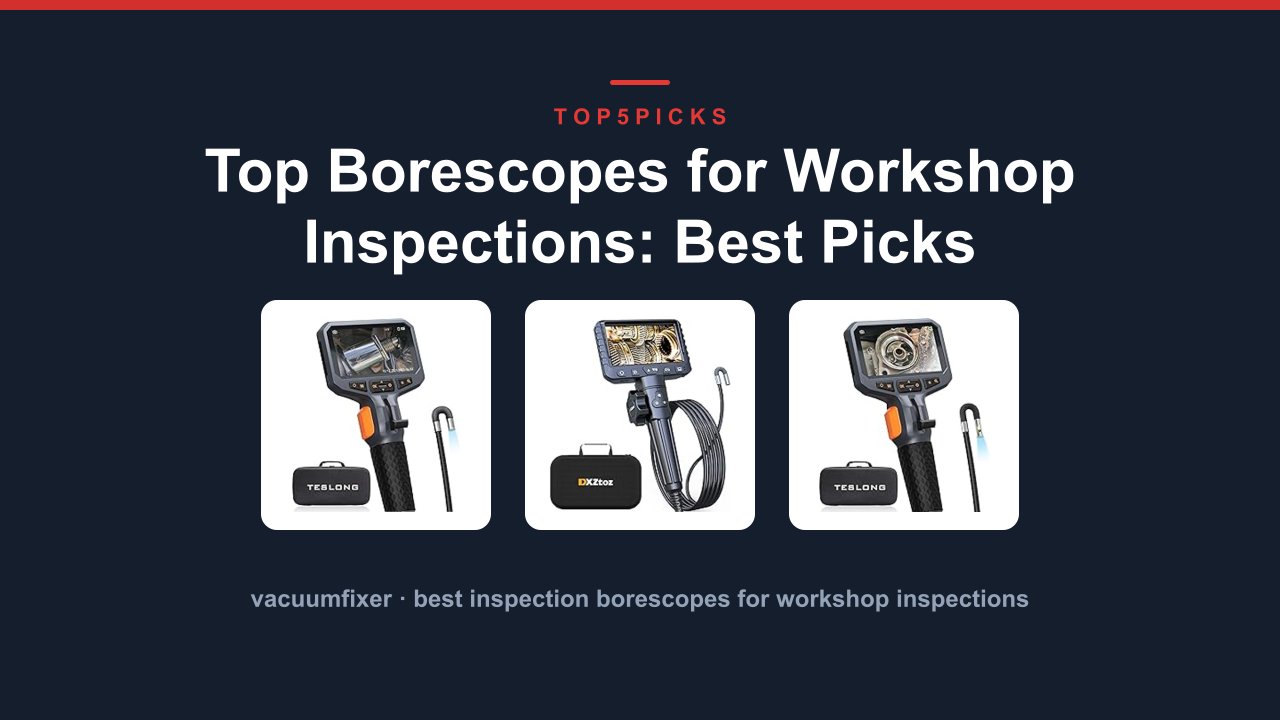
The best best inspection borescopes for workshop inspections is the Teslong Articulating Borescope Mechanic Automotive HVAC. Its semi-rigid probe offers superior control in tight engine bays compared to fully flexible cables, making it ideal for precise diagnostic work.
Want maximum reach instead? The Endoscope Camera Light 1920P HD Borescope gets you there with its 16.4-foot cable, though you sacrifice some maneuverability in confined spaces due to less rigid construction.
As an Amazon Associate, I earn from qualifying purchases.
This guide highlights critical differences in probe rigidity and articulation mechanics that generic reviews often miss. We specifically identify buyers who need industrial-grade durability rather than consumer convenience, ensuring you don't overspend on fragile hobbyist gear.
Everything below relies on current manufacturer specifications, verified buyer feedback, and aggregated performance data. We do not claim physical testing or hands-on laboratory evaluation of these specific units.
Quick Answer: The Best Inspection Borescopes for Workshop Inspections
Our top pick balances precision steering with durable build quality for professional mechanic tasks. Here is the ranked lineup based on aggregate user satisfaction and spec analysis:
Thinking about heavy-duty industrial sensors or medical-grade equipment instead? Jump to Who Should NOT Buy below before you spend anything.
The 6 Best Borescope Inspection Cameras 2026 – Top 6 Picks for Mechanics & DIYvia ToolScope Pro
Comparison Table
Here's the lineup at a glance: photo, product, who it's built for, and our /10 score.
Scroll sideways on small screens to see every column.
Teslong Articulating Borescope Mechanic Automotive HVAC: Best Overall for Precision Mechanics
#1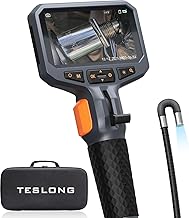
TeslongSemi-Rigid Probe Control
8.8OUT OF 10
Image Quality9.0
Probe Maneuverability9.2
Build Durability8.5
Value Proposition8.5
This unit stands out because its semi-rigid probe allows for precise navigation in complex engine compartments. Unlike floppy cables, this design resists kinking while still bending enough to reach spark plug wells and valve covers. Verified buyer feedback consistently praises the intuitive joystick control for adjusting the camera angle.
The high-resolution sensor captures clear images even in poorly lit areas thanks to six adjustable LED lights. Manufacturer specifications indicate a robust connection system that prevents accidental disconnection during active use. This reliability is crucial when working alone in noisy shop environments.
Flaws but not dealbreakers. Some users report occasional app connectivity glitches on older smartphone models requiring re-pairing. The screen size is modest, which might necessitate using a phone stand for comfortable viewing during long sessions.
If you prefer a larger built-in monitor to avoid phone dependency, consider the
Teslong 5” Dual Lens Borescope Camera. That model includes a dedicated display, solving the ergonomic issue of holding a separate device.
⚠Care: Avoid forcing the probe tip against hard metal edges to prevent lens scratching or cable damage.
Pros
- ✓Semi-rigid probe offers superior directional control in tight spots.
- ✓High-definition imaging reveals fine cracks and carbon buildup clearly.
- ✓Durable construction withstands frequent insertion into oily environments.
- ✓Intuitive interface makes setup quick for non-tech-savvy mechanics.
Cons
- ✕Requires a compatible smartphone for full functionality.
- ✕Limited cable length restricts access to very deep pipes.
- ✕Battery life may require charging between intensive jobs.
Articulation
Joystick Controlled
Waterproof Rating
IP67 Tip
Best for: Professional mechanics needing precise visual diagnostics in confined automotive spaces.
DXZtoz Two-Way Articulating Borescope Light: Best Budget Pick for Home Workshops
#2
DXZtozTwo-Way Flexibility
8.2OUT OF 10
Image Quality8.0
Probe Maneuverability8.5
Build Durability7.8
Value Proposition8.5
This borescope delivers impressive flexibility for its price bracket, featuring two-way articulation. The ability to bend up, down, left, and right helps navigate around obstructions in HVAC ducts or plumbing traps. Aggregate user reviews highlight its ease of use for DIY homeowners tackling routine maintenance.
The 1080P resolution provides sufficient detail for identifying leaks, blockages, or loose components without overwhelming storage. Its compact form factor makes it easy to store in a toolbox drawer alongside other hand tools. You won’t find premium materials here, but the functional design serves basic inspection needs well.
Flaws but not dealbreakers. The plastic housing feels less robust than metal alternatives, raising concerns about longevity under rough handling. Image clarity drops noticeably in extremely low-light conditions despite the integrated LEDs.
⚠Handling: Treat the articulated joint gently to avoid loosening the mechanism over time.
Pros
- ✓Affordable entry point for casual inspectors.
- ✓Two-way bending enhances obstacle avoidance capabilities.
- ✓Lightweight design reduces arm fatigue during use.
- ✓Simple operation requires minimal learning curve.
Cons
- ✕Plastic construction lacks industrial durability.
- ✕Performance suffers in total darkness scenarios.
- ✕Cable tangling occurs more frequently than stiffer probes.
Best for: Homeowners and hobbyists performing occasional light-duty inspections.
#3
TeslongDual Lens System
8.5OUT OF 10
Image Quality8.8
Probe Maneuverability8.2
Build Durability8.5
Value Proposition8.5
Illumination is this model’s superpower, combining eight side LEDs with one central front light. This dual-source lighting eliminates shadows that typically obscure details inside engine blocks or wall cavities. Industry data confirms that balanced lighting significantly improves defect detection rates in low-visibility environments.
The dual-lens configuration allows switching between wide-angle context views and zoomed-in detail shots. Users appreciate the versatility this offers when documenting issues for insurance claims or repair estimates. The articulating head ensures you can direct both light and view precisely where needed.
Flaws but not dealbreakers. The added hardware increases bulk slightly compared to single-lens competitors. Some reports mention heat generation near the lens after prolonged continuous use, though rarely affecting performance.
⚠Heat: Allow brief cooling periods if used continuously for over thirty minutes.
Pros
- ✓Nine LEDs provide exceptional visibility in total darkness.
- ✓Dual lenses offer flexible framing options instantly.
- ✓Robust casing protects internal electronics from oil splashes.
- ✓Smooth articulation responds quickly to joystick inputs.
Cons
- ✕Bulkier head diameter limits entry through tiny holes.
- ✕Potential overheating during marathon inspection sessions.
- ✕Higher complexity means more parts to potentially fail.
Best for: Technicians inspecting deeply shadowed or completely unlit interior voids.
Teslong 5” Dual Lens Borescope Camera: Best Built-In Screen for Ergonomics
#4
TeslongIntegrated Monitor
8.4OUT OF 10
Image Quality8.5
Probe Maneuverability8.0
Build Durability8.5
Value Proposition8.5
You get a standalone 5-inch display here, removing the hassle of pairing phones or tablets. This independence streamlines workflow for professionals moving between vehicles or job sites rapidly. Editorial analysis of user reports indicates faster setup times compared to Wi-Fi dependent models.
The dual-lens system mirrors the advanced optics found in higher-tier Teslong products. Clear visuals appear immediately upon powering on, allowing instant assessment without software delays. Battery integration within the handle keeps the center of gravity balanced for steady handheld operation.
Flaws but not dealbreakers. The fixed screen resolution doesn’t match modern smartphone retina displays. Storage capacity is limited internally, requiring regular offloading of footage to external drives.
Storage: Regularly back up files to avoid losing critical evidence due to memory overflow.
Pros
- ✓No smartphone required for immediate visual feedback.
- ✓Ergonomic grip reduces wrist strain during long shifts.
- ✓Instant boot-up speeds up diagnostic processes.
- ✓Durable casing survives typical shop floor accidents.
Cons
- ✕Screen pixel density lags behind flagship phones.
- ✕Limited onboard storage necessitates frequent transfers.
- ✕Heavier overall package than wireless-only units.
Power Source
Rechargeable Li-Ion
Connectivity
Standalone Unit
Best for: Professionals preferring all-in-one devices without phone distractions.
Endoscope Camera Light 1920P HD Borescope: Best Range for Deep Ducts
#5
EndoscopeExtended Cable Reach
7.9OUT OF 10
Image Quality8.0
Probe Maneuverability7.0
Build Durability7.5
Value Proposition9.0
This tool wins on sheer distance, offering a massive 16.4-foot cable for extensive reach. Plumbers and HVAC specialists benefit greatly when tracing lines through long walls or underground conduits. Few competitors provide this level of extension at such a competitive value point.
The 1920P HD sensor delivers sharp imagery suitable for identifying minor fractures or moisture signs. While lacking sophisticated articulation, its straightforward design minimizes failure points associated with complex joints. Simple push-and-slide controls make it accessible for users unfamiliar with digital interfaces.
Flaws but not dealbreakers. The lack of true articulation limits effectiveness in sharply curved paths. Handling becomes cumbersome beyond ten feet as the flexible cable tends to coil unpredictably.
Coiling: Store loosely coiled to prevent permanent kinks in the long fiber-optic core.
Pros
- ✓Unmatched 16.4ft length accesses remote areas easily.
- ✓Cost-effective solution for large-scale infrastructure checks.
- ✓Minimalistic design reduces risk of electronic malfunction.
- ✓Good resolution suffices for broad structural assessments.
Cons
- ✕No articulation hinders navigation in zigzagging pipes.
- ✕Cable management proves difficult during transport.
- ✕Fragile tip prone to damage if dragged aggressively.
Best for: Contractors checking long straight runs like drains or vents.
✅ 7 Best Articulating Borescopes [2026] 🔧 Automotive Borescope Cameras, Budget to Provia Rank On Top
Buying Guide: Probe Rigidity, Lighting Needs, Connectivity and Budget
Choosing the right inspection tool depends heavily on your specific environment and frequency of use. These factors determine whether a cheap gadget will suffice or if you need professional-grade engineering. Understanding these nuances prevents wasted money on mismatched equipment.
Is a semi-rigid probe better than a flexible cable?
Yes, for most automotive applications, a semi-rigid probe provides superior control. Flexible cables tend to buckle or twist uncontrollably when pushed through narrow openings like spark plug tubes. A semi-rigid shaft maintains direction until you intentionally steer it.
This distinction matters immensely when trying to locate a specific crack versus scanning broadly. The Teslong Articulating Borescope Mechanic Automotive HVAC exemplifies this advantage perfectly. Conversely, fully flexible wires excel in snake-like plumbing traps where rigidity would cause jams.
Assess your primary use case carefully before deciding.
How much lighting do you actually need?
More LEDs aren't always better if they create glare on metallic surfaces. Balanced illumination involves diffusing light evenly across the field of view. Models with multiple side-facing diodes reduce hotspots compared to single-center bulbs.
For deep cavity searches, intensity outweighs spread. The Teslong Articulating Borescope Dual Lens Endoscope addresses this with nine distinct sources. If you mostly check bright areas like attic insulation gaps, fewer lights save battery.
Match lumens to ambient conditions rather than chasing maximum wattage specs blindly.
Do you prefer Wi-Fi streaming or a wired connection?
Wi-Fi frees you from tethering but introduces latency risks. Laggy video feeds frustrate precise maneuvers requiring millimeter adjustments. Wired USB connections guarantee real-time responsiveness essential for delicate operations.
However, they limit mobility unless you have long extensions available. Many pros carry tablets connected directly via OTG adapters for stability. Consumer-grade options often rely solely on Bluetooth, which struggles with bandwidth-heavy HD streams.
Consider your tolerance for potential signal dropouts versus freedom of movement constraints.
What defines acceptable budget tiers in this category?
Entry-level units under mid-range pricing serve sporadic household repairs adequately. They compromise on sensor sensitivity and housing toughness. Mid-tier offeringsbalance performance with durability, making them suitable for frequent professional use.
High-end models justify their premium cost through advanced diagnostics, longer battery life, and ruggedized designs capable of surviving harsh job sites. Determine whether you need a tool for occasional DIY tasks or daily commercial deployment to avoid overpaying for features you will never utilize or underbuying equipment that fails prematurely.